

OpenAI’s GPT-5.1 isn’t just an incremental update—it’s a workflow transformation for marketing teams. With ChatGPT approaching 800 million weekly active users, AI literacy has moved from competitive advantage to table stakes. But the real question facing marketers isn’t whether to use GPT-5.1. It’s knowing when to use Instant mode versus Thinking mode, and how to leverage the new tone controls without losing your brand’s voice.
I’ve been testing GPT-5.1 marketing use cases since the November release, and the productivity shift is measurable. Here’s the practical playbook for content, SEO, and CRO applications.
What’s New in GPT-5.1
According to OpenAI’s GPT-5.1 release announcement, the model introduces reasoning token calibration—dynamically allocating computational resources based on query complexity. Simple questions use fewer tokens; complex problems receive deeper analysis. For marketing operations running high-volume content workflows, this translates to cost efficiency without sacrificing quality.
The accuracy improvements matter more than the technical specs. Independent benchmark analysis shows GPT-5.1 Thinking mode is 26% more accurate than GPT-4o and produces six times fewer factual errors on open-ended benchmarks. That’s the difference between content that requires heavy editing and content that’s nearly publish-ready.
Enhanced steerability means the model responds more reliably to instructions about output length, communication style, and formatting. When you ask for concise, you get concise. When you need comprehensive, it delivers depth.
Instant vs Thinking Mode: A Marketer’s Decision Framework
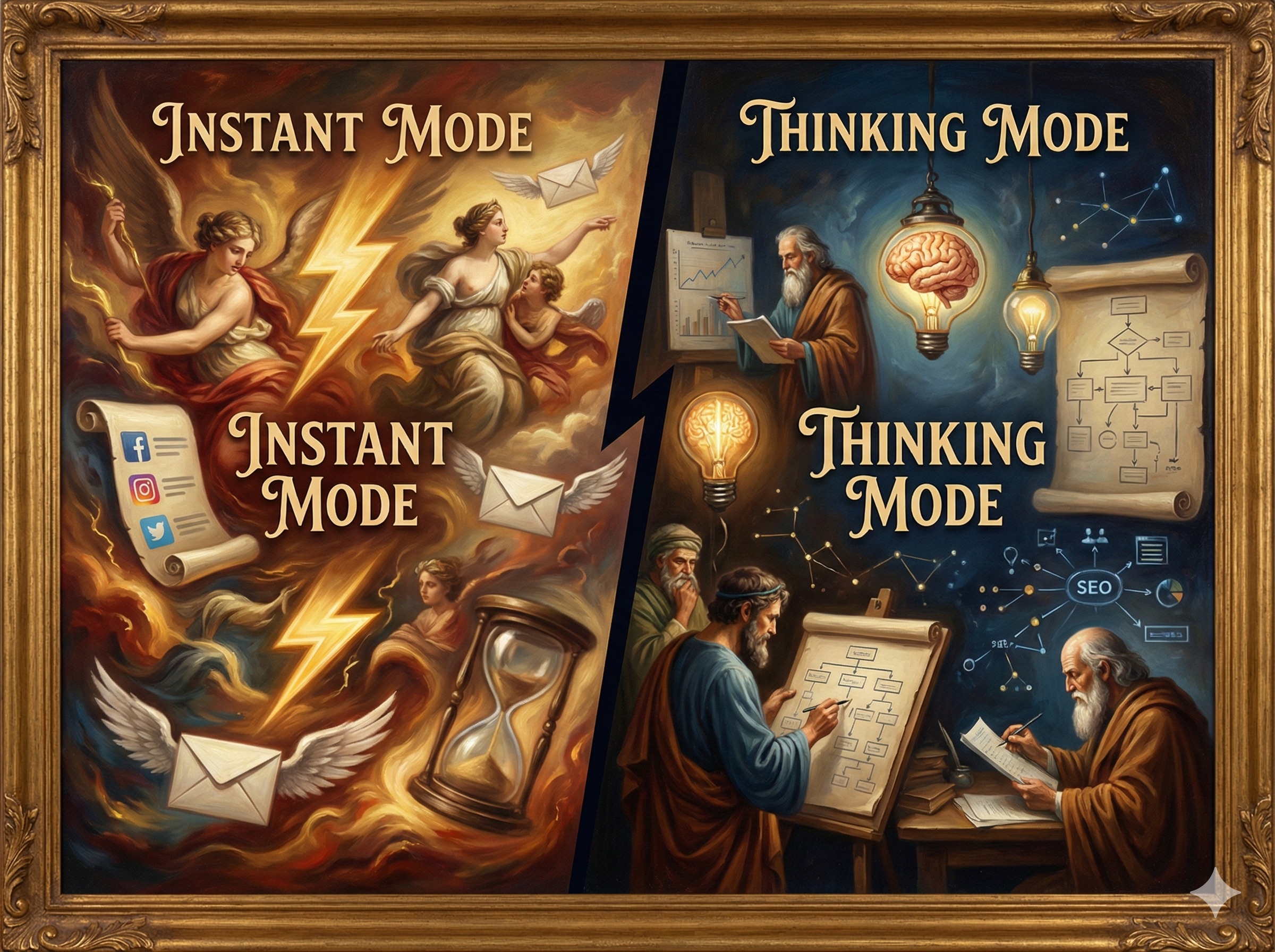
This is where GPT-5.1 gets interesting for marketing teams. You’re no longer working with a single model—you’re choosing between two distinct approaches to every task.
GPT-5.1 Instant Mode
Instant mode prioritizes speed and conversational fluency. The outputs feel warm and natural, optimized for quick iterations and high-volume production.
Use Instant mode for:
- Social media posts and ad captions
- Email drafts and newsletter content
- Quick copy variations for A/B testing
- Customer response templates
- Daily content that needs a human touch
Example output: “Your glow shouldn’t wait—five seconds to fresher skin.”
GPT-5.1 Thinking Mode
Thinking mode allocates more compute to complex reasoning. The model pauses, analyzes context, and ensures deeper alignment with your objectives. Outputs are strategic, deliberate, and analytical.
Use Thinking mode for:
- Campaign strategy and planning
- Brand narrative development
- SEO content architecture
- Competitive analysis and positioning
- Long-form content that requires synthesis across multiple sources
Example output: A complete campaign brief with emotional angles, tagline options, audience segmentation, and channel-specific messaging recommendations.
When to Use Which
| Task | Mode | Why |
|---|---|---|
| Daily social content | Instant | Speed matters; tone is conversational |
| Campaign strategy | Thinking | Requires synthesis and strategic reasoning |
| Quick email draft | Instant | Low stakes; fast iteration needed |
| SEO content planning | Thinking | Intent analysis and competitive research |
| Ad copy variations | Instant | Volume and speed for testing |
| Brand voice documentation | Thinking | Strategic asset requiring precision |
The decision is straightforward: if speed matters more than depth, use Instant. If strategic thinking matters more than velocity, use Thinking.
Tone Controls That Actually Work
GPT-5.1 expands personalization with seven tone presets that reflect different brand personalities:
Professional: Polished and precise—ideal for B2B and luxury brands where authority matters.
Friendly: Approachable and warm—works for lifestyle brands and service businesses building relationships.
Candid: Honest and motivational—fits startups and creator brands that value authenticity.
Quirky: Playful and bold—designed for youth-focused and entertainment brands.
Efficient: Direct and concise—perfect for tech and SaaS messaging where clarity wins.
Nerdy: Enthusiastic and curious—great for education and innovation brands.
Cynical: Witty and skeptical—for brands that embrace bold opinions and contrarian takes.
The key improvement: tone changes now apply immediately across all chats, including ongoing conversations. OpenAI’s research on ChatGPT usage patterns shows users increasingly rely on custom instructions for professional workflows. GPT-5.1 adheres more reliably to these instructions, which means you can brief ChatGPT once and maintain consistency across your entire content ecosystem.
For agencies managing multiple brand voices, this is transformative. Lock in the tone preset, add custom instructions for specific guidelines, and every output sounds consistently on-brand.
Marketing Workflows Transformed
Content Creation Velocity
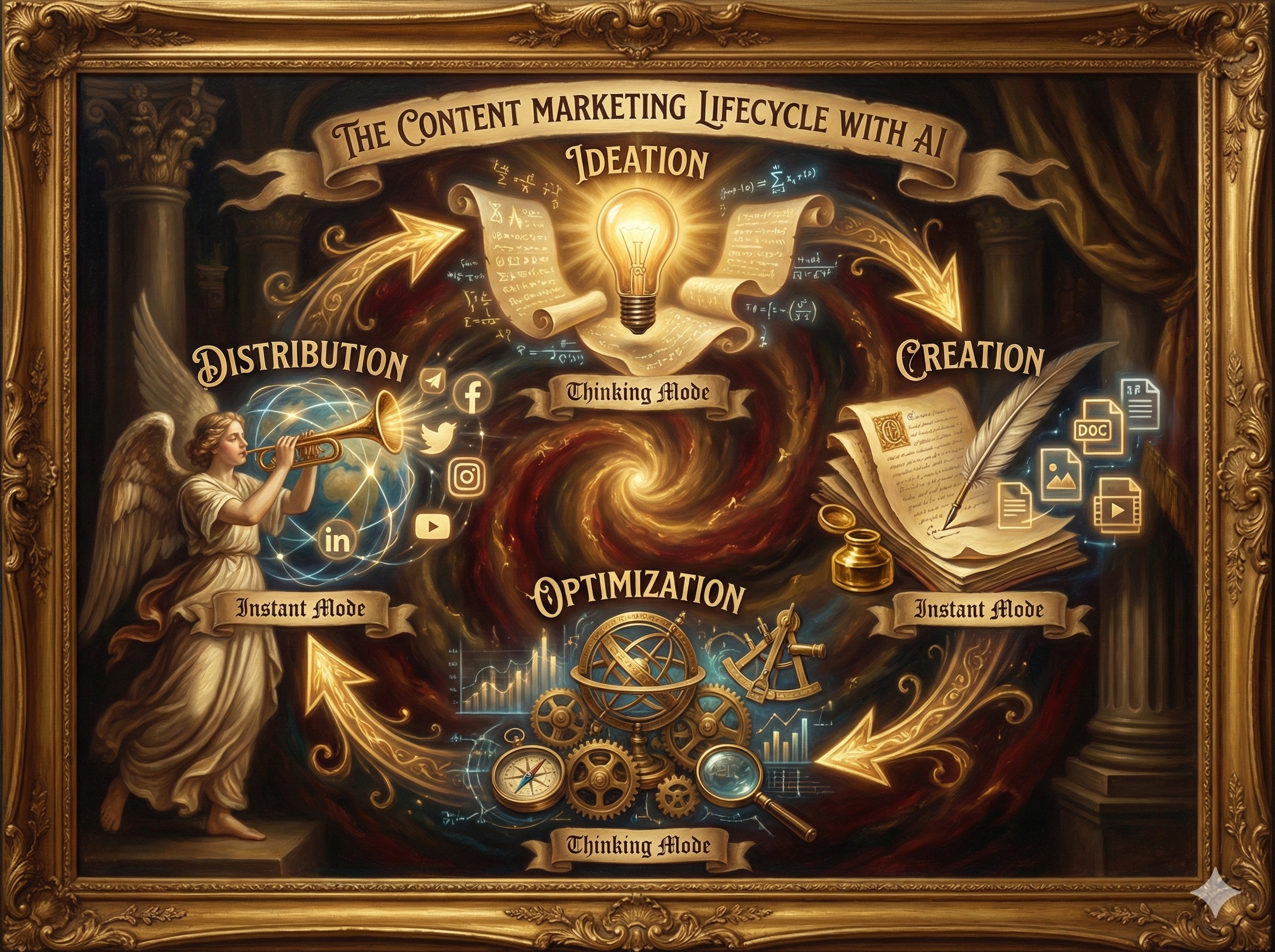
GPT-5.1 covers the entire content lifecycle:
Ideation: Feed it performance data, competitor content, or audience research. Thinking mode identifies gaps and opportunities.
Creation: Instant mode generates blogs, video scripts, emails, and ad copies at volume.
Optimization: Either mode rewrites for tone, clarity, or platform-specific requirements.
Distribution: Instant mode drafts social snippets, CTAs, and summaries for each channel.
The workflow pattern: use Thinking mode for strategy, Instant mode for execution. Start each project with Thinking mode analysis, then switch to Instant for rapid content production.
SEO That Understands Intent
GPT-5.1 understands search intent rather than keyword matching. It crafts semantic content that’s natural, conversion-driven, and technically sound.
Practical applications:
- Build programmatic SEO pages at scale without sounding repetitive
- Write schema-rich blog posts and FAQ sections optimized for crawlability
- Map keyword clusters to content journeys that blend storytelling with search logic
Pro tip: Pair Thinking mode with your Google Search Console data. You’ll find ranking gaps and get strategic recommendations on fixing them—not just content suggestions, but technical and structural advice.
CRO Through Conversation
GPT-5.1’s emotional intelligence enables conversation-led marketing that feels genuinely personal:
- Empathetic responses in customer support that adapt to user sentiment
- Tone adjustment during live conversations based on frustration or satisfaction signals
- Personalized follow-up sequences based on behavior patterns
When a customer expresses frustration, GPT-5.1 responds calmly, shifts tone, and offers solutions with warmth. That adaptability translates to higher engagement rates, better retention, and improved conversion journeys.
The QA Checklist Before You Publish
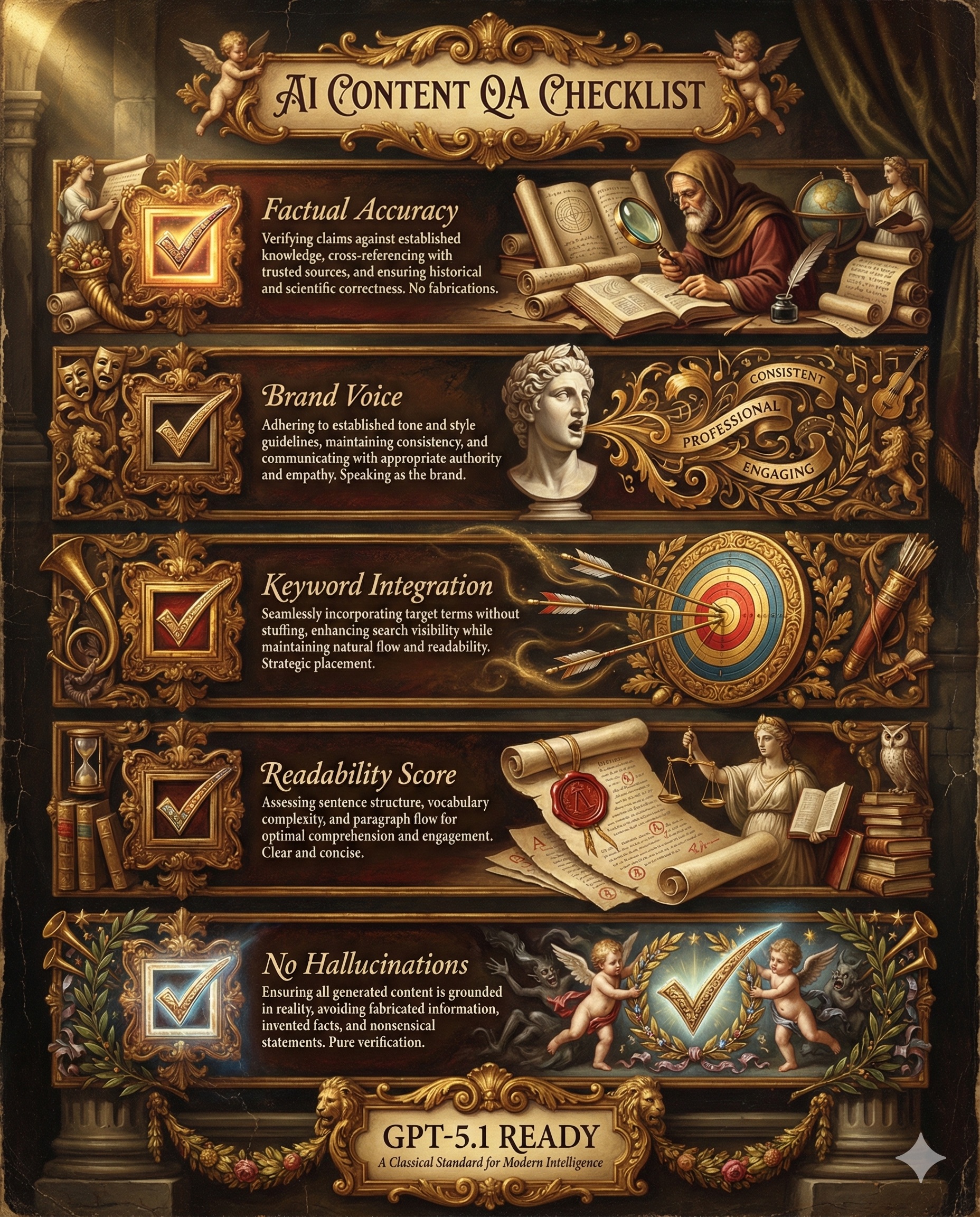
AI-generated content still requires human oversight. Here’s the review framework:
Factual Accuracy: Verify all statistics, dates, and claims. Cross-reference cited sources.
Brand Voice Alignment: Confirm content matches your selected tone preset and brand guidelines.
Keyword Integration: Check that primary keywords appear naturally—in title, H1, and body—without stuffing.
Readability Score: Ensure content meets your target audience’s reading level.
No Hallucinations: GPT-5.1 is better, but not perfect. Verify any specific claims or recommendations.
Governance: Disclose AI assistance where required by your industry or platform policies. Avoid exposing customer PII. Ensure competitor references are accurate and fair.
Getting Started: Your 30-Day Rollout
Week 1: Experiment with both modes on low-stakes content. Get a feel for when each mode delivers better results.
Week 2: Define your tone preset. Test consistency across different content types.
Week 3: Build prompt templates for recurring tasks. Document what works.
Week 4: Establish your QA workflow and governance guidelines. Train your team on mode selection.
Ready to Integrate GPT-5.1 Into Your Marketing Stack?
GPT-5.1 changes both the what (modes and tones) and the how (workflows and velocity). The competitive advantage goes to teams who master mode selection and build systems that leverage AI without losing brand authenticity.
At Matt Kundo Digital Marketing, I help businesses implement AI workflows that drive measurable results—not just content volume, but content that converts.
- AI workflow audits to identify automation opportunities
- Prompt library development for consistent, on-brand outputs
- Team training on mode selection and QA processes
Schedule a consultation to discuss how GPT-5.1 fits your marketing operations.
Frequently Asked Questions
What’s the difference between GPT-5.1 Instant and Thinking modes?
Instant mode prioritizes speed and conversational fluency for high-volume content like social posts and email drafts. Thinking mode allocates more compute to complex reasoning tasks like campaign strategy, SEO planning, and brand narrative development. Choose based on whether speed or strategic depth matters more for the task.
How do I choose the right tone preset for my brand?
Match the preset to your brand personality and audience expectations. Professional works for B2B and luxury; Friendly suits lifestyle and service brands; Efficient fits tech and SaaS. Test your selection across different content types to ensure consistency, then lock it in with custom instructions for specific guidelines.
What’s the best GPT-5.1 workflow for SEO content?
Start with Thinking mode for keyword research, intent analysis, and content architecture. Switch to Instant mode for drafting individual pieces at volume. Use Thinking mode again for optimization recommendations. Pair GPT-5.1 with Google Search Console data to identify ranking gaps and get strategic fixes.
Sources
- TechCrunch – Sam Altman Says ChatGPT Has Hit 800M Weekly Active Users
- OpenAI – Introducing GPT-5.1
- DataCamp – GPT-5.1: Features, Benchmarks, and Performance Analysis
- OpenAI Help – Customizing Your ChatGPT Personality
- OpenAI – How People Are Using ChatGPT
Matt Kundo Digital Marketing provides data-driven marketing strategy for businesses seeking measurable results. Explore our services or get in touch to discuss your marketing challenges.